

Innovation system > Solution proposed by LIFE Cyanobloom
Solution proposed by
LIFE Cyanobloom
Cyanobacteria detection
CYANOBLOOM will implement satellite monitoring in lakes and reservoirs in different countries of Europe with high-resolution images, thanks to a combination of public and private satellites. The project will further enhance and refine existing service infrastructure built under CyanoAlert by BROCKMANN CONSULT and BROCKMANN GEOMATICS and evolve it towards the specific requirements and establish the integration of in-situ data measurements triggered by the information derived from satellite data. This means the information obtained from Sentinel-2 and Sentinel-3 will be complemented with information from other sensors (hyperspectral and VHR). A continuous screening system based on multi-sensor data will be established to provide estimates of chlorophyll concentration and indications of cyanobacteria presence in a water body.
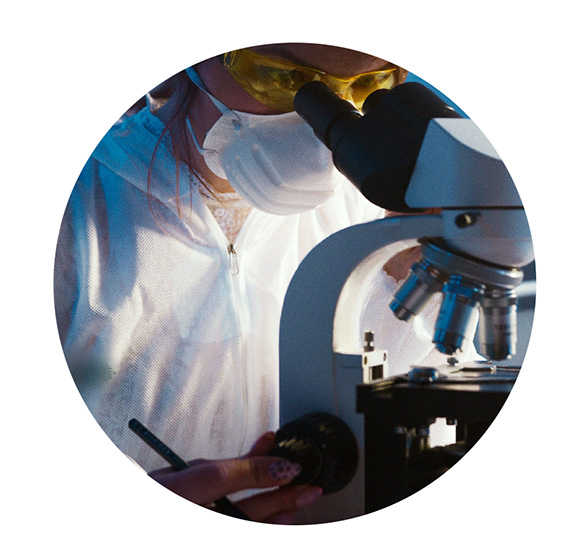
To overcome the known issue of data gaps due to cloud coverage, CYANOBLOOM will include high-frequent on-ground measurements to fill the gaps at the most sensitive locations. In situ sensors such as fluoroprobes are often used for such kind of automated, frequent measurements. However, these instruments are prone to errors caused by algae growing on the sensors, called ‘bio-fouling’ which leads to highly inaccurate results or high maintenance costs (to visit the sensor for cleaning). To avoid this issue, CYANOBLOOM will work with an above-water system: the Water Insight’s Spectrometer Station (WISPstation). An additional advantage is that the WISPstation also measures surface reflectance, which makes it very suitable to validate or even calibrate the surface reflectance derived from satellite imagery, which allows CYANOBLOOM to provide the most accurate results.
CYANOBLOOM will establish an automated data flow from satellite data alerting cyanobacteria occurrence to trigger indicative measurements and the feedback from DNA analysis about toxicity to the warning system.
Innovation 1
The project will provide an innovative approach that will combine the optical methods (satellites and hyperspectral field systems) to detect, as early as possible, the bloom apparition with the possibility to act before than with the traditional methods. The new productions lines for commercial Very High Resolution (VHR) satellite data will have a daily coverage with 3-4 m spatial resolution, to extend the screening system and maximise the data and information contents.
Hence, the project will allow us to reduce the possibility of a toxic bloom to happen unnoticed and mitigation strategies will be implemented to reduce the magnitude of the bloom impact. The proposed approach will lead to a more efficient sampling system, since the field samples collected following a previously established plan to assess the quality of the water, may be complemented with those collected when a potential danger is detected, which will allow us to provide better service to users. Having reliable information will make it possible to avoid unnecessary sampling costs (e.g., field trips).
When a cyanobacteria harmful algal bloom (cyanoHAB) indicator is available in the geographical area, alert levels will be established to determine when there is a potential danger and field sampling will be carried out to measure the toxicity parameters. A dashboard will be designed to warn about potential high cyanobacteria occurrence based on the information derived from the satellite data.
Toxicity confirmation
The detection methods are based on the principle that some cyanobacteria are potentially toxic, while others do not develop toxicity. The identification of these cyanobacteria by optical methods is complex, due, among other things, to their small size and to the fact that the morphological differences on which taxonomists base their identifications, are not always distinguishable by these methods. Moreover, even if the group to which the individual belongs is identified, a potentially toxic cyanobacterium does not always generate toxins. So far, the main mechanisms that cause phytoplankton to proliferate (temperature, water stagnation, nutrients, etc.) are known, but the mechanisms that cause a group of cells to produce toxins are unknown. Although the number of studies is increasing, there is a lack of standardised analytical methods to fully characterise the risk of toxins and they only work in research laboratories, instead of in field and non- commercial applications.
Methods and approaches for the analysis and detection of cyanotoxins are well-described in several reviews. General analytical methods for each cyanotoxin are listed in the Table. Analytical methods available for the detection of cyanotoxins.
| Toxin | Detection method |
|---|---|
| Microcystins | ELISA, HPLC, MS, PPIA |
| Nodularins | ELISA, HPLC, MS, PPIA |
| Cylindrospermopsins | ELISA, HPLC, MS |
| Anatoxin-a | ELISA, HPLC, MS |
| Anatoxin-a(s) | AEIA, MS |
| Saxitoxins | ELISA, HPLC, MS |
| BMAA | ELISA, HPLC, MS |
Innovation 2
A toxicity gene control (identification and quantification) protocol will be established by means of genetic analysis. Identification of toxicity genes allows data on risk to be obtained before the toxin has been produced. Consequently, management measures, that were not available before (the toxin was only measured once produced and present in the water) will be taken due to early action, since it will be known if the toxin is present in the water, if it does not exist at that moment but there is a high probability that it will appear in the next hours, or if the toxin is not present and it will not be generated in the short term. Consequently, toxicity events will be anticipated.